Campsites in all countries
An overview of all campsites in over 61 countries
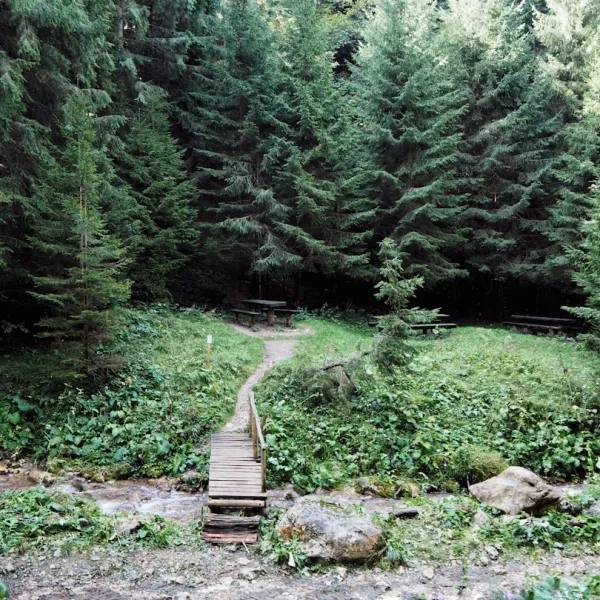
Its location in Eastern Europe means that Romania has to deal with a continental climate, which ensures cold winters and warm summers. The best time to travel to Romania is from May to September. This is the period with the greatest chance of spring-like or summer temperatures and a reasonable amount of sunshine. Romania is not a very wet destination anyway, so the precipitation is hardly a determining factor when determining the best time to travel. In fact, during what we consider to be the best time to travel to Romania, there is the most precipitation. May, June and July are in many places the wettest months of the year. However, the amounts are so limited that they are still not outright wet months.
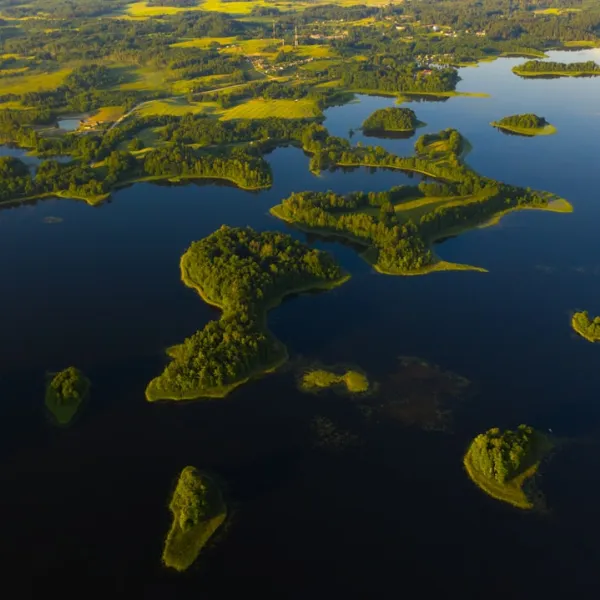
The Republic of Latvia belongs to the Baltic States, which are located in north-eastern Europe. Latvia's climate lies on the border of a temperate continental climate (Dfb) and the temperate maritime climate (Cfb). The influence of the Baltic Sea, on which Latvia is situated, is certainly present. The regular influx of very cool air from the east in the winter or very warm air in the summer means that Latvia can experience the capriciousness that is a distinctive feature of a continental climate.
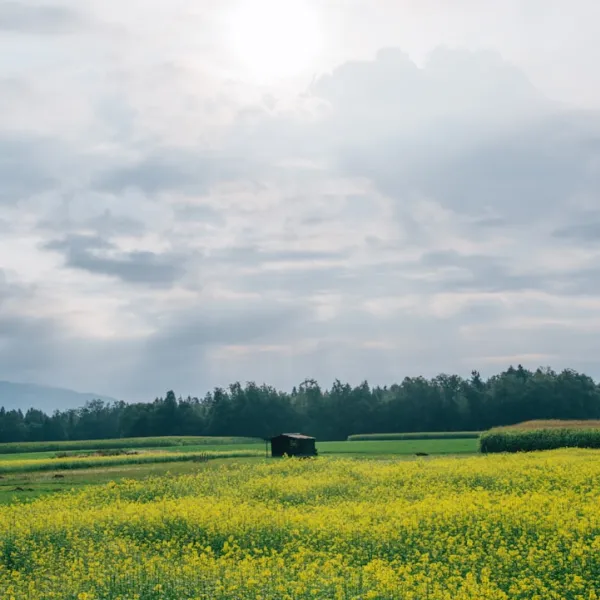
The Republic of Slovenia is a country located in the central part of Europe. The state was created when Yugoslavia fell apart in 1991. Slovenia lies on the Adriatic Sea, where it has a relatively short coastline. It measures only 47 kilometres. The coastal area is fairly flat and has a temperate Mediterranean climate. Inland, it is mostly mountainous, with lower lying areas behind it. The temperate continental climate prevails here with an alpine climate in the higher places. Since the rain comes mainly from the Gulf of Genoa, the western part of Slovenia is significantly wetter than the east, which is sheltered behind the mountainous areas. The Karavanke and Julian Alps receive the most precipitation, which in winter often takes the form of snow.
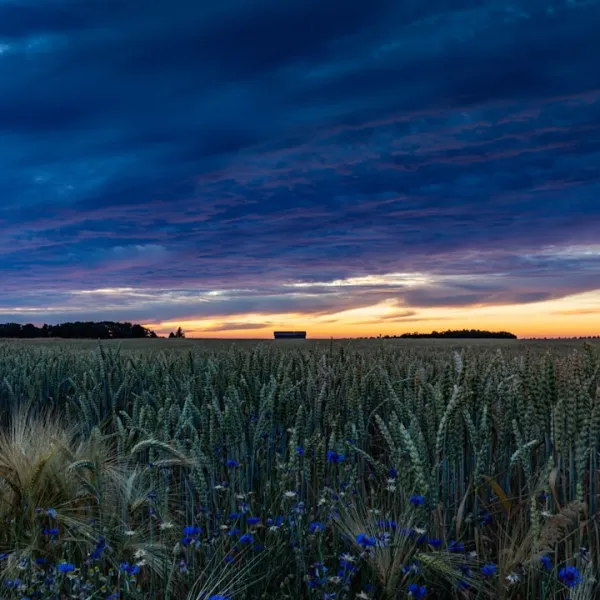
The Grand Duchy of Luxembourg is a small country in western Europe. Because of its proximity to the North Sea and the Atlantic Ocean beyond, Luxembourg has a temperate maritime climate with continental characteristics. Although Luxembourg is not very big in terms of surface area, there are some differences in the average weather. The north of the country, with an average annual precipitation of up to about 1,200 millimetres, is wetter than the south, where the amount of precipitation is often limited to about 800 to 900 millimetres per calendar year. This is because Atlantic disturbances are better able to reach the north of Luxembourg.
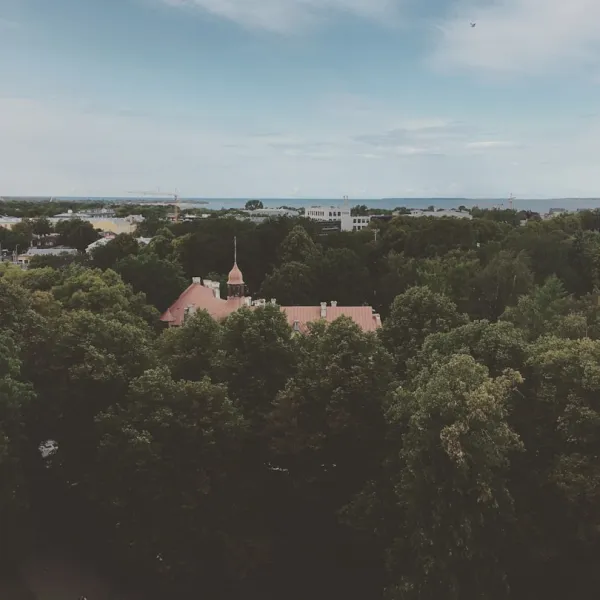
Estonia is the northernmost country of the Baltic States. It is separated from more northerly Finland by the Gulf of Finland. Estonia's climate lies on the boundary between a temperate maritime climate and a temperate continental climate. Summers are generally mild and the winter months are on the cool side. Precipitation is fairly evenly spread throughout the year, with more being recorded in the period July to November than in the period December to June. In winter, a fair share of the precipitation falls in the form of snow or other winter precipitation. The winter months are very gloomy. In the month of January, the sun shines on average for less than an hour a day. The rest of the time it is half to heavily cloudy. As the relative humidity is high during this coolest time of year, fog or mist forms quite easily.
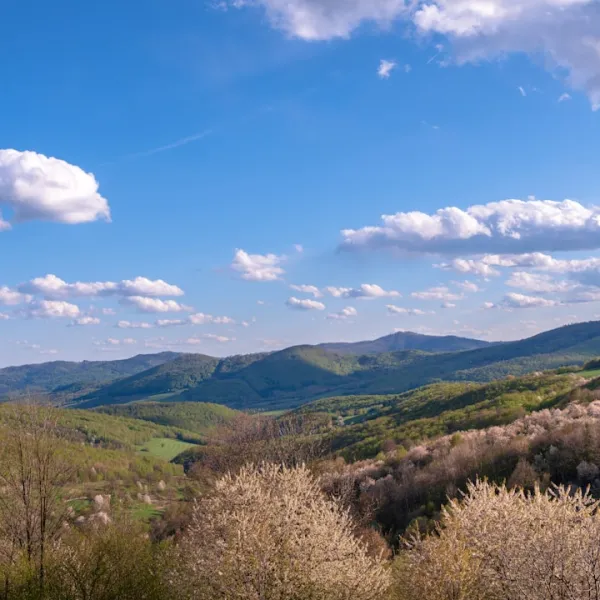
Slovakia, located centrally in Europe, consists largely of hilly landscapes and mountains. Only in the west you will find lower lying flat areas. The climate in Slovakia is continental. The only exception is the higher mountain areas, where the climate changes to a tundra climate at higher altitudes. A characteristic of the weather in Slovakia is that it can be erratic. In the summer months, the temperature can be as high as 16 degrees one day, while a week later the thermometers shoot up to 35 degrees or even higher. The same capriciousness can be found in the winter. Milder periods can alternate with periods of moderate to severe frost giving the country a serious winter character. Late spring and early autumn are often the best months to travel to destinations with a continental climate like Slovakia.
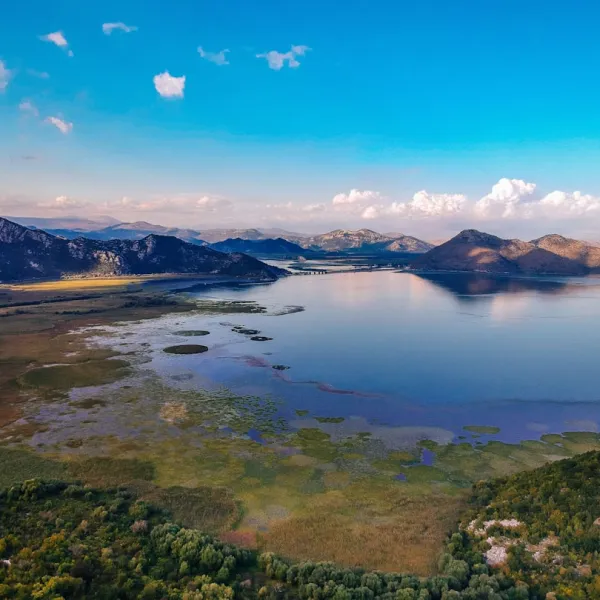
In the Balkans lies the relatively small country of Montenegro, which is about two-thirds smaller than the Netherlands in terms of land area. Montenegro is situated on the Adriatic Sea, where it has approximately 294 kilometres of coastline. There are various beaches along the coast. The more than twelve kilometres long sandy beach Velika Plaža is the longest beach of the country and can be found in the southwest of Montenegro. Behind the relatively narrow coastal strip the landscape of Montenegro consists mainly of karst areas. Many areas are on average around one thousand metres above sea level, but there are also peaks within the Dinaric Alps that reach two thousand metres.
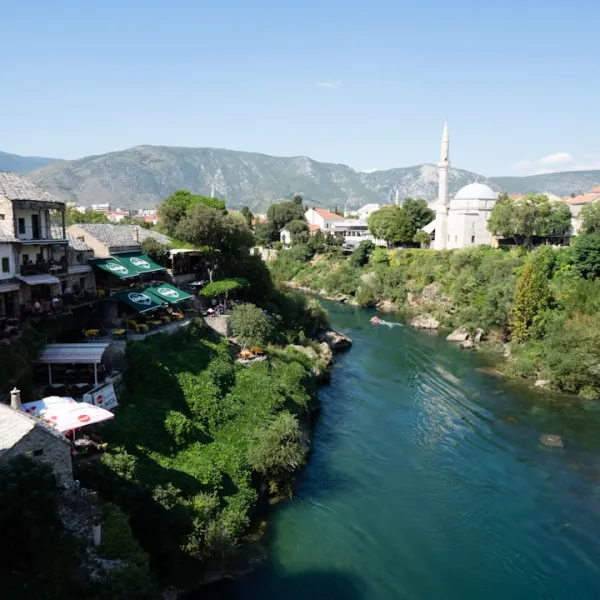
Bosnia and Herzegovina is located in the Balkans. It has a coastal strip that is about eight kilometres long. Behind it lies a lowland plain which, like the short stretch of coastline, has a Mediterranean climate. Further inland, the landscape has a more hilly to mountainous character. The climate is more extreme there, changing from a temperate maritime climate to a continental climate as soon as you reach higher altitudes. If you are planning a holiday in Bosnia and Herzegovina, May to September is the best time to travel. If you don't like the heat, you may want to avoid the summer months of July and August. The average afternoon temperature is between 24 and 30 degrees, but higher temperatures are possible. If you prefer more moderate temperatures, it is better to go on holiday to Bosnia and Herzegovina in June or September.
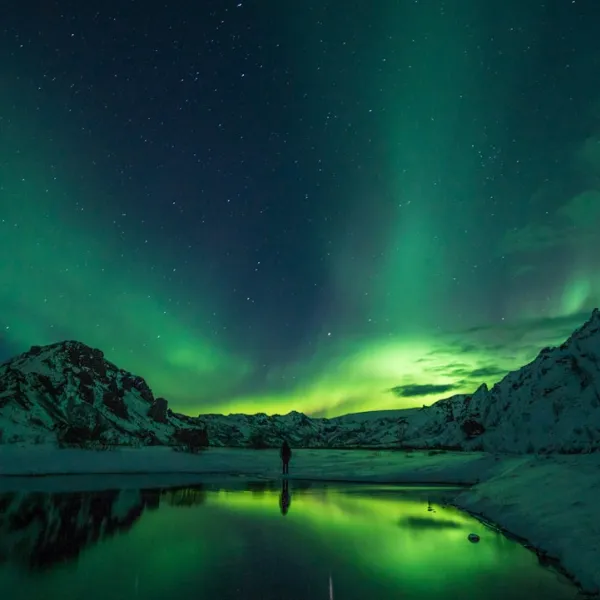
If you think of Iceland, you will quickly think that it is always icy and cold there. Especially when you see that this country is situated near the polar circle. This assumption is partly correct. In the winter, it is mostly cool, snow falls regularly and you can therefore speak of serious winter conditions. However, there is a 'but' and that is that it is not as cold as you would think. Because Iceland is surrounded by relatively warm ocean water, the cold is tempered. This also applies to the summer. Then the water has a cooling effect, because the water temperatures are relatively low.
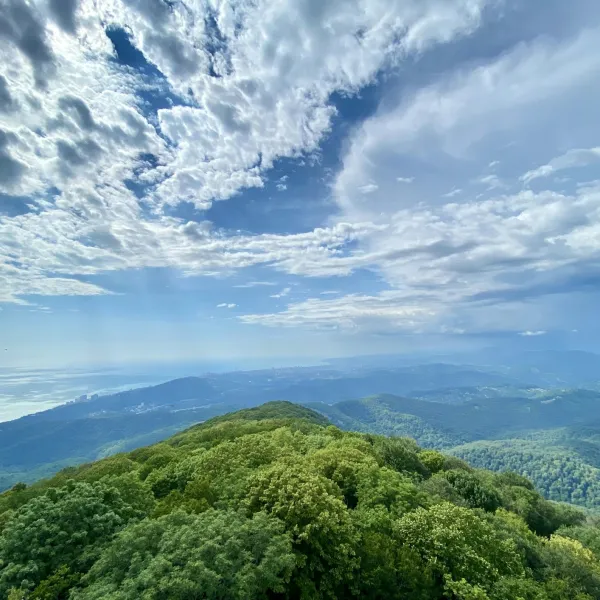
If you know that Russia is the largest country in the world, you will realise that it is not so easy to determine the best travel time for the whole of Russia. In a country of such dimensions, different climates are found. Russia has a stark climate with many extremes. In winter months it is cool (west) to very cold (Siberia) while in summer it is cool (polar region) to very hot (inland). Average values that apply to Russia's climate are really averages. Upward and downward fluctuations are possible. In the winter months you always have to reckon with extreme weather conditions. Even in the more temperate regions it can freeze quite hard, which means that all kinds of risks increase rapidly. In addition to the direct danger to health (freezing), the risk of car and other equipment breaking down due to the low temperatures is also very real. In spring and autumn, you should bear in mind that the transition from winter to summer and vice versa is not as gradual as we are used to in the Netherlands. Within a few weeks, there can be temperature differences of tens of degrees.
The Balkan country of Albania is located by the sea, but has a climate that is sometimes more like a continental climate than a maritime one because of its capriciousness. Officially, Albania has a warm Mediterranean climate in the coastal areas and a temperate Mediterranean climate inland. On the mountain tops, there is a continental climate with, on the highest peaks, a subarctic climate, which is quite exceptional for this latitude. The best time to travel to Albania is from May to September. This is the period when it is not too cold and the weather is mostly good.